

[Buy this map in different sizes or resolutions, please scroll down for the Order Form.]
Disclaimer : All efforts have been made to make this image accurate. However Compare Infobase Limited,its directors and employees do not own any responsibility for the correctness or authenticity of the same.
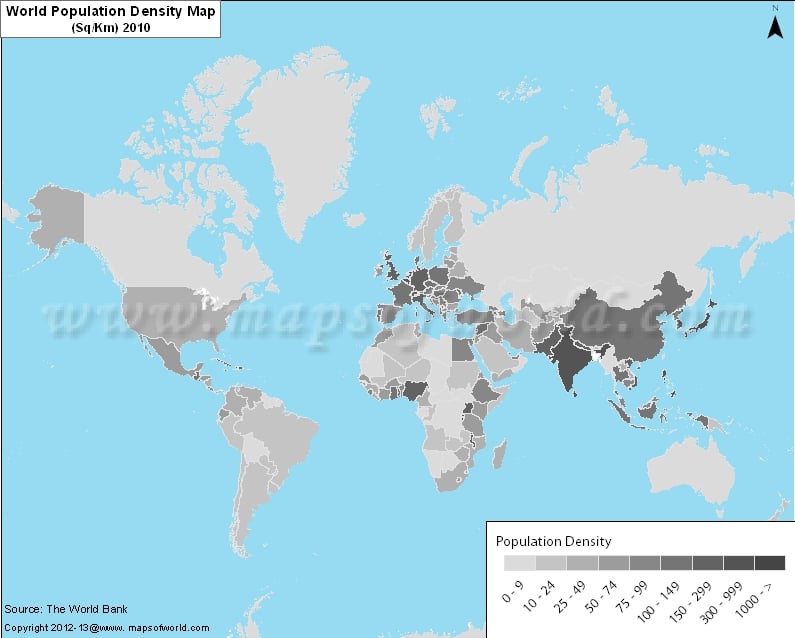
The World Population Density Map provides an overview of the current population density in different parts of the world. The geographical or political regions with varied population densities have been highlighted in different colors to get a quick idea about the difference in population for different regions of the world.
In the population density world mapbelow, those regions of the world with population densities ranging from 0 to 50 people per sq. km. have been highlighted in mauve which includes almost all of North and South America, Australia, a large part of Africa and Antarctica; which shows that these are the least populated parts of the world.US populationfalls in this category.United States' populationcurrently stands at 302,633,000 (2007 estimate). Even when theStates' populationfigures are separately, the same pattern will follow. Regions with population densities ranging from 50 to 100 have been highlighted in light green; this includes mostly European countries and parts of Asia and Africa and a very few areas of North America; indicating low to moderate population densities in these parts of the world. Regions with a population density of 100 to 200 have been highlighted in yellow which include mostly Asian countries with quite a few areas in Europe and Africa as well and a very few areas in the Americas. These areas indicate moderate to high population densities.Regions with population densities ranging from 200 to 300 have been highlighted in red which include highly populated areas of Asia and Europe. Regions with population densities ranging from 300 to 500 have been highlighted in brown which include densely populated regions in the Asian and European continents. Regions with population densities ranging from 500 to 1000 have been highlighted in dark green which includes extremely dense areas. Current world populationis more than 6 billion, in whichcities' populationexceeds the ruralpopulation. Mapsdepicting the population distribution in different ways are available at Mapsofworld.comAlso given below is a table mentioning different countries' population.City populationfigures for important cities of the world can be availed from the city profiles given elsewhere in the site. With the help of population density map, students and researchers can makeworld population graph. Mapsofworld.com has vast collection of pages andworld mapson different countries with details like,population, geography ,history, culture and polity.Come, let's have a bird's eye view of the variation in population densities of different countries of the world. Explore the world population density mapbelow, which are equally useful for students, academicians as well as layman who wish to compareworld geographyand population density | |||||
|
